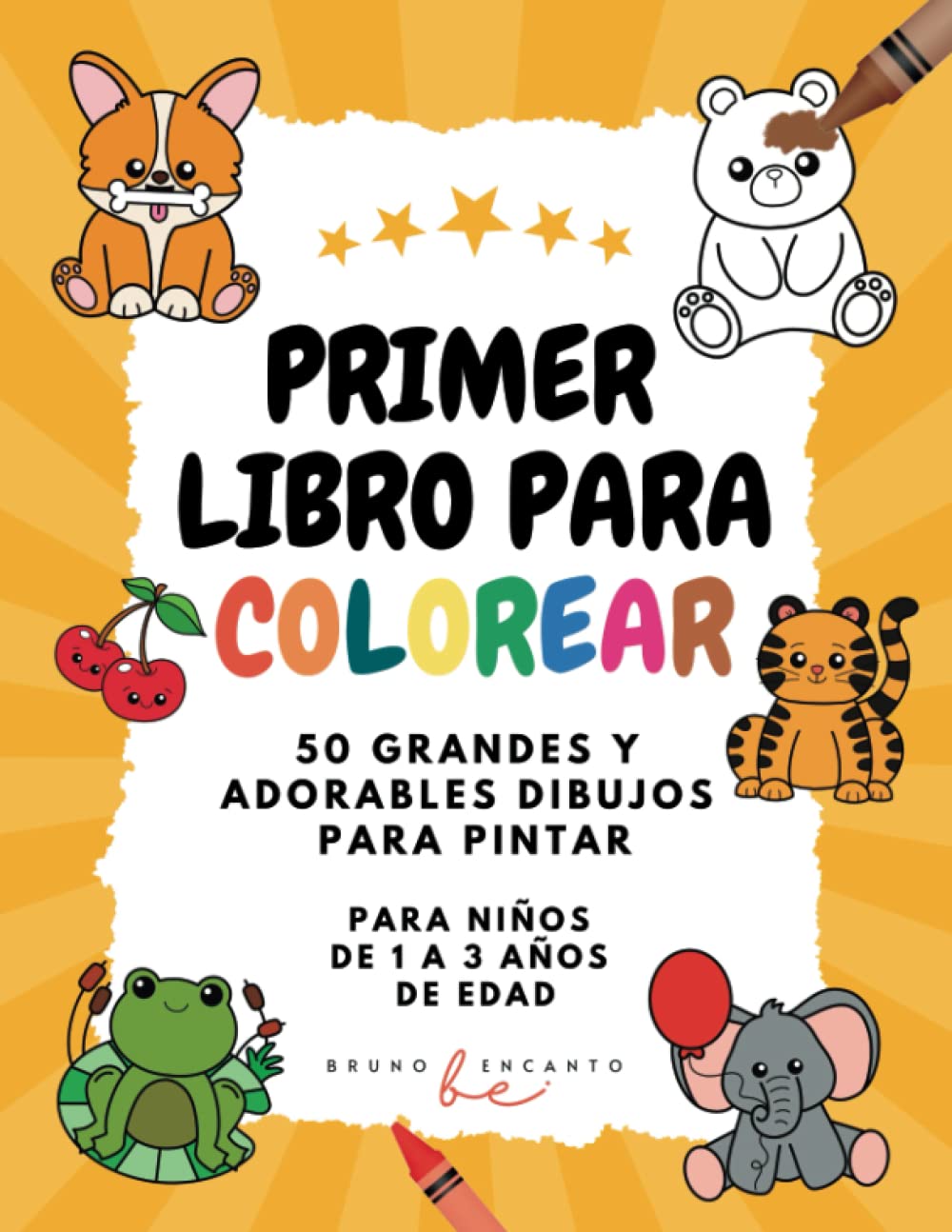
You want the moment where they sit down, pick a colour and stay. That has almost nothing to do with the age on the cover and almost everything to do with what's in their hand and how big the shapes are.
01
12 to 18 months: making marks
Right now they're learning that moving an arm leaves a trace. Expect scribbles that run clean off the paper, and expect a crayon in the mouth at least once.
Give them chunky, non-toxic crayons and the biggest pages you have. The drawing underneath doesn't matter yet — the page is a target, not a task.
“A simple dog drawn with thick lines gives a toddler something obvious to aim at. A page of fine detail gives them nowhere to start.”
02
18 months to 3 years: filling shapes
Somewhere in here they start aiming. They'll colour over the outline and well past it, and that's exactly right — this is the hand control that later turns into handwriting.
This is where line weight decides whether the book gets used. Thick outlines hide overspill and give them a target. Thin, detailed art looks lovely on a cover and gets abandoned on page two.
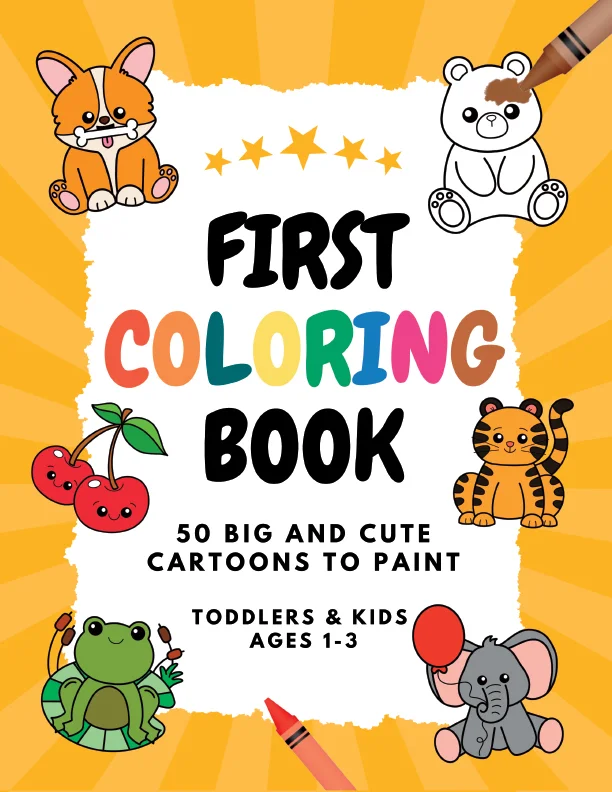 Built exactly this wayFirst Coloring BookBoost your child's creativity, learning, and skills with this top-rated early childhood development tool.See the book →
03
3 to 5 years: staying inside the lines
Most children can keep colour roughly inside a large shape by three, and reliably by five. Now the choices get deliberate: the sky gets to be purple because they decided so, and arguing with that is a fast way to end the session.
Keep changing the subject rather than the difficulty. More detail, too early, shortens how long they stay with a page.
04
What to actually put on the table
Chunky or triangular crayons under three. Coloured pencils from about four. Washable markers whenever you're willing to deal with the table afterwards.
One drawing per page matters more than most people expect: a finished picture can be torn out and put on the fridge, and that's a big part of why they come back for the next one.